

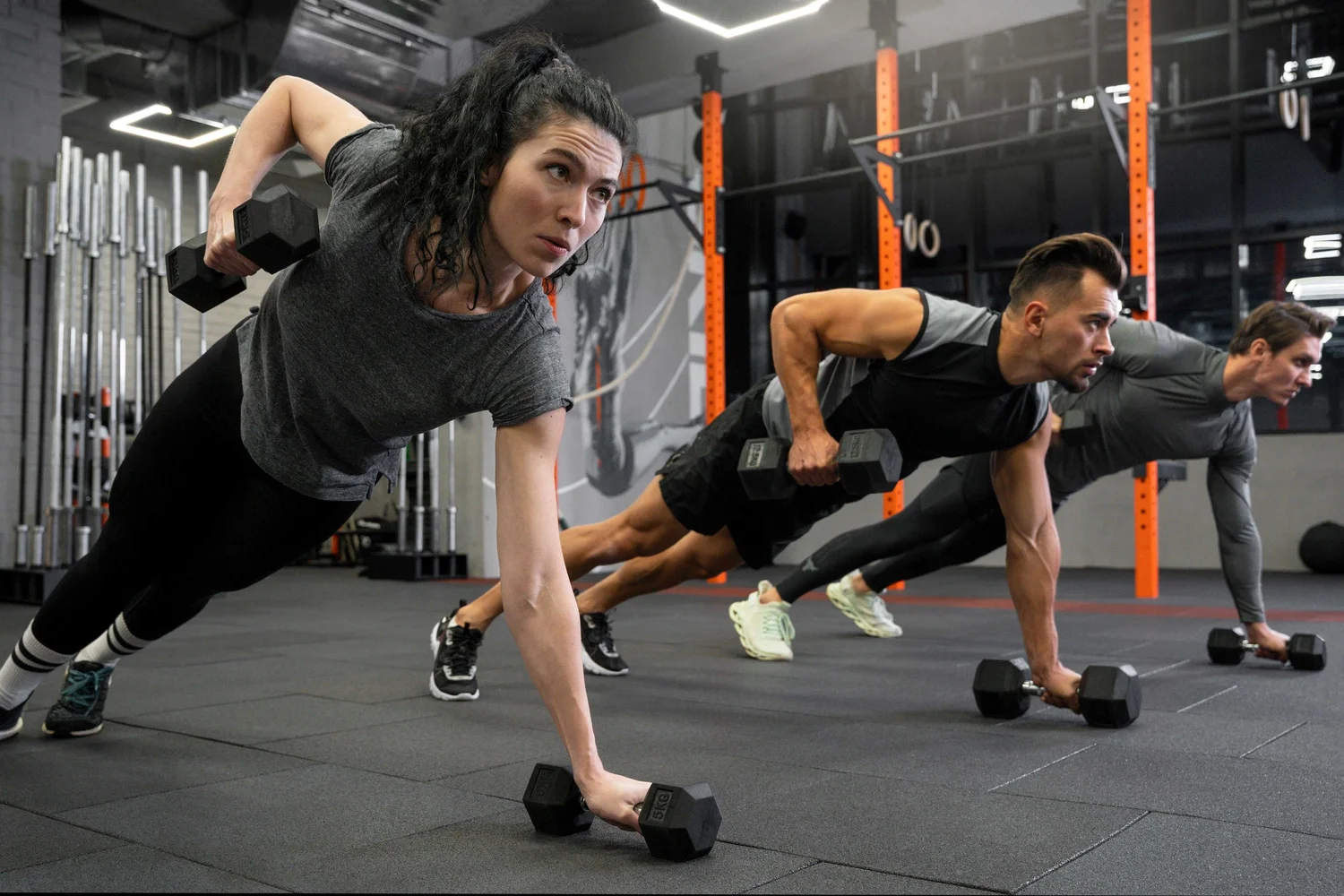
Singapore’s personal training market spans a wide pricing range. At the lower end, trainers at commercial gym chains charge session rates that reflect minimal experience and basic certification. At the upper end, specialist trainers command rates that reflect years of professional development, advanced expertise, and a track record of producing results for demanding clients. Understanding what actually justifies the premium is useful for members evaluating whether to invest in higher-end PT and for trainers understanding what development they need to reach the premium tier.
For members seeking a personal trainer Singapore at any price point, the ability to assess what qualifications, experience, and approach deliver genuine value at a premium rate is essential.
The Foundation: Qualifications and Continuing Education
Premium PT rates in Singapore begin with qualification depth that goes significantly beyond the baseline certification required to work in a gym. The trainers who command the highest rates typically hold:
A primary internationally recognised certification from a rigorous body such as NASM, NSCA, or ACSM. These certifications are not equivalent and the quality of education they represent varies significantly. NSCA’s Certified Strength and Conditioning Specialist designation is widely considered one of the most demanding and well-regarded credentials in the industry.
Advanced specialist certifications in one or more areas that expand the trainer’s scope and the populations they can effectively serve. Corrective exercise specialisation, sports performance enhancement, pre and postnatal training, sports nutrition coaching, and clinical exercise physiology are examples of advanced credentials that justify premium positioning.
Evidence of ongoing continuing education beyond what is required for certification renewal. Trainers who attend advanced workshops, pursue formal study in related fields, and actively update their knowledge base demonstrate a professional commitment that differentiates them from those who maintain baseline qualifications without growth.
Years of Applied Experience With Demanding Client Populations
Qualifications provide the framework. Experience fills it with the applied knowledge that cannot be taught in a classroom. Premium trainers have typically worked with a range of challenging client populations: serious athletes, clients managing complex injuries, older adults with multiple health considerations, and clients whose goals required genuine problem-solving rather than template application.
This experience develops the clinical eye that allows a premium trainer to identify movement dysfunction quickly, design programme progressions that account for individual response patterns, and manage the inevitable complications that arise when real people are trained over real time.
Years of experience are necessary but not sufficient. A trainer who has delivered 10 years of mediocre programming has a different experience base from one who has spent the same period working in sophisticated performance environments and continuously raising their standard. The quality of experience matters as much as its volume.
Measurable Client Outcomes and Reputation
The most powerful justification for premium PT rates is a verifiable track record of client outcomes. Trainers who can point to specific, measurable results achieved with clients across a range of goals and circumstances demonstrate value that credentials and experience describe but cannot confirm.
In Singapore’s professional community, where fitness circles overlap significantly with professional networks, reputation carries enormous weight. A trainer whose clients consistently refer their colleagues, whose before and after InBody data is available for review, and whose client retention rates reflect sustained satisfaction is building market evidence for their premium positioning that no amount of marketing can manufacture.
Communication and Client Management Skills
Technical expertise without effective client management produces poor outcomes regardless of programme quality. Premium trainers combine coaching knowledge with the interpersonal and communication skills to translate that knowledge into consistent client action.
This includes the ability to build genuine trust that produces honest communication about what is and is not working, the motivational intelligence to adapt their approach to different client personalities and circumstances, the professional boundary management that keeps the training relationship productive over long periods, and the educational skill to help clients understand enough of the programme rationale to become genuinely invested participants rather than passive recipients of instruction.
Specialisation That Commands Scarcity Value
A generalist trainer who is very good is worth significantly more than a mediocre one. A specialist trainer with rare expertise in a high-demand area commands a premium beyond what general excellence justifies, because their specific capability is scarce relative to the demand for it.
Singapore’s PT market has identified several specialisation areas where scarcity premium is justified: sports rehabilitation for elite athletes, pre and postnatal specialist training, programming for older adults with complex health profiles, and performance enhancement for specific sports including golf, tennis, and triathlon. Trainers who develop genuine expertise in these areas and build a reputation within the relevant communities can command rates that reflect the limited availability of their specific capability.
FAQ
Is it worth paying significantly more for a premium PT if I am a fitness beginner?
For beginners, the most important PT qualities are clear communication, patience with basic movement learning, and the ability to establish good training habits. A premium specialist may be overqualified for this phase. That said, a premium trainer with strong generalist skills will also prevent the early technique errors that become entrenched over time, which has lasting value.
How can I verify a trainer’s claimed qualifications in Singapore?
Ask for the certificate documentation directly and verify the issuing organisation. Recognised bodies including NASM, NSCA, ACSM, and the UK’s CIMSPA maintain public registers where certifications can be confirmed. A trainer who is reluctant to provide documentation or whose credentials cannot be verified through the issuing body warrants caution.
Is a higher-priced trainer always a better trainer?
Not always. Premium pricing can reflect genuine expertise or it can reflect effective marketing, a prestigious gym affiliation, or an aesthetic personal brand that signals competence without necessarily delivering it. The evaluation criteria in this article provide a framework for assessing whether the premium is justified by substance.
What is the typical career development path for a PT aiming at the premium tier in Singapore?
The typical path involves initial certification and two to three years of broad experience, followed by advanced specialisation certification and deliberate focus on a specific client population or capability area. Building a referral-driven client base within a specific community and developing a reputation through demonstrable client outcomes typically precedes premium rate positioning. Five to eight years of consistent professional development is a common timeline for reaching genuine premium market positioning.
TFX Singapore employs trainers who meet the qualification, experience, and outcome standards that justify premium positioning, ensuring that members who invest in their personal training programme receive the depth of expertise that premium rates represent.